The Evolution of Poetry: from Classical to Contemporary
The Evolution of Poetry: A Window into Human Experience
Poetry serves as a captivating conduit for human expression, weaving together the rich tapestry of emotions, experiences, and societal shifts throughout the ages. Spanning from the oral traditions of ancient civilizations to the innovative digital landscapes of today, poetry embodies the essence of storytelling, reflection, and, ultimately, the very nature of being human.
Historically, poets have not only chronicled life’s adventures but have also pushed against the constraints of their times, leading to profound revolutions in the art form. This evolution can be observed through several pivotal aspects:
- Form and Structure: From the elaborate patterns of traditional sonnets and ballads to the liberated rhythms of free verse, poetry’s structural evolution mirrors its cultural contexts. The sonnet’s 14-line format, celebrated by Shakespeare, contrasts sharply with the fluidity of free verse seen in the works of modern poets like Mary Oliver, where structure bends to reflect the personal and social dynamics of contemporary life.
- Language and Themes: The evolution of poetry is also marked by a shift in language and thematic focuses. Where once poets relied on formal and often archaic language, contemporary poets embrace diverse vernaculars, including urban slang and colloquial speech. This linguistic democratization is evident in the works of poets such as Ocean Vuong and Amanda Gorman, who bring forth themes of identity, resilience, and social justice, resonating deeply within today’s cultural conversations.
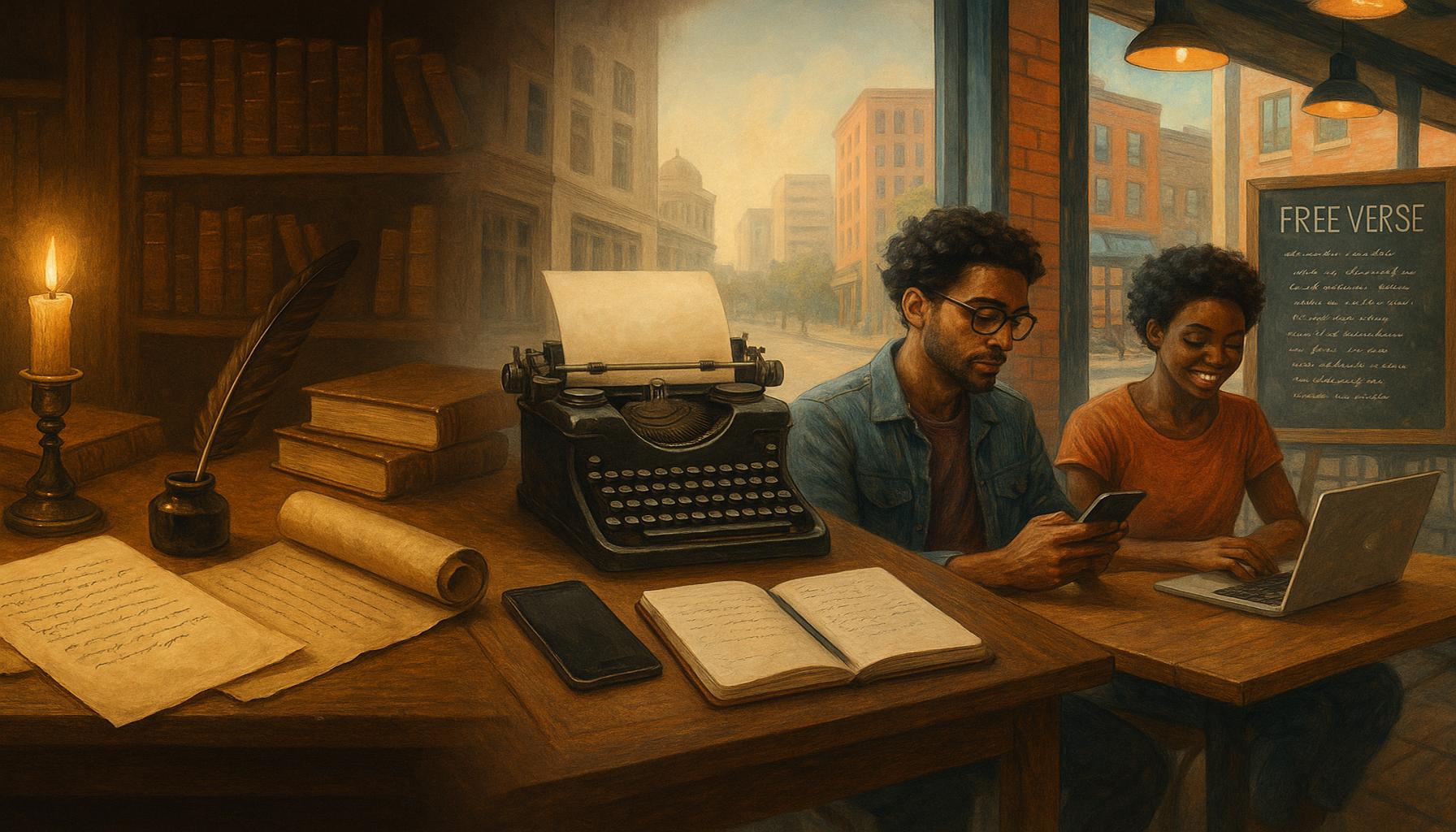
- Accessibility: The accessibility of poetry has dramatically changed, moving from the exclusive salons of elite society to digital platforms like social media and blogs. This shift has allowed for a broader audience and more inclusive community engagement. Platforms like Instagram Poetry offer poets a stage to share their work while fostering connections between readers and writers globally.
In the United States, significant cultural movements, including the Harlem Renaissance and the Beat Generation, have greatly influenced the trajectory of modern poetry. The Harlem Renaissance gave voice to African American experiences, elevating poets such as Langston Hughes and Zora Neale Hurston, whose works centered on themes of racial identity and empowerment. Meanwhile, the Beat Generation, represented by poets like Allen Ginsberg, challenged societal norms and explored themes of rebellion, spirituality, and personal freedom, reflecting the turbulence of the post-war era.
Contemporary poets continue to innovate, with many incorporating multimedia elements and technology into their works. The rise of spoken word, for instance, illustrates how performance can redefine poetry’s boundaries and accessibility, inviting audiences to experience poetry in a visceral way. Digital platforms facilitate quick exchanges of ideas and styles, connecting poets worldwide and further pushing the boundaries of what poetry can encapsulate.
As readers explore this rich evolution—from its historical roots to the dynamic expressions of today—they are invited to engage with the continuing journey of poetry. By examining how past styles intertwine with modern articulations, one can uncover the profound depths of poetic expression that reflect the complexities of human existence.
DIVE DEEPER: Click here to discover the science of flavor
Tracing the Roots: Classical Poetry and Its Foundations
The journey of poetry begins in the ancient world, where it served as a vital means for humans to document their existence, beliefs, and aspirations. Classical poetry, often rooted in the oral traditions of storytelling, utilized meter, rhyme, and strict structural elements to captivate audiences. These early forms were not merely artistic expressions; they played crucial roles in cultural preservation and communal identity.
Among the earliest known poets, Homer stands out with epic works such as “The Iliad” and “The Odyssey.” His use of dactylic hexameter set a standard for narrative poetry that would echo through centuries. The storytelling embedded in these epics provided not just tales of heroism but also insights into the values, norms, and struggles of ancient Greek society. Similarly, in India, texts like the Mahabharata showcased the intersection of mythology and morality, bridging the realms of spirituality and daily life.
As poetry evolved through the ages, various forms emerged, influenced by cultural and historical contexts. The sonnet, particularly prominent in the Renaissance, became a vessel for deep personal emotion and philosophical exploration. Figures such as William Shakespeare and Petrarch mastered this intricate form, employing its 14-line structure to delve into themes of love, mortality, and beauty. The sonnet’s popularity stemmed from its ability to convey complex feelings within a confined format, demonstrating how structure could enhance emotional depth.
During the Romantic period, poets like William Wordsworth and John Keats shifted their focus towards nature, individualism, and an emotional response to the world. This movement emphasized personal reflection and a break from formal constraints—marking a crucial turning point in poetry’s evolution. The Romantic poets popularized the idea of the poet as a visionary, someone who could articulate deep emotional truths and critique societal conventions through the lens of personal experience.
The rise of Modernism in the early 20th century brought a radical departure from traditional forms. The traumas of World War I and the rapid societal changes of the time prompted poets like T.S. Eliot and Ezra Pound to explore fragmentation and ambiguity. Their works often abandoned conventional structure, embracing free verse and stream-of-consciousness techniques that reflected the chaotic nature of modern life. This period was characterized by a search for meaning amidst disillusionment, pushing poetry to new intellectual and artistic heights.
Key Characteristics of Classical to Modern Poetry
- Oral Traditions: Early poetry relied on oral traditions that emphasized performance and memory.
- Structured Forms: Classical poetry utilized structured forms, such as the sonnet and epic, to convey specific themes.
- Emotional Depth: Romantic poets emphasized personal experience and emotional exploration.
- Modern Techniques: Modernist poets employed fragmented narratives and free verse to capture the complexities of contemporary life.
Understanding this trajectory from classical to modern poetry not only enriches one’s appreciation of literature but also reveals enduring human concerns across generations. Each form reflects the voices and experiences of its time, inviting readers to engage with a continuing conversation about the human experience through the art of poetry.
| Advantages of Classical Poetry | Advantages of Contemporary Poetry |
|---|---|
| Structure and Form | Accessibility and Innovation |
| Classical poetry often adheres to strict forms, such as sonnets and haikus, which showcase artistic mastery. | Contemporary poetry breaks away from traditional constraints, encouraging wider experimentation and personal expression. |
| Cultural Reflection | Diversity of Voices |
| Classical poetry captures the values, beliefs, and emotions of its historical context, serving as a cultural artifact. | Contemporary poetry promotes diverse perspectives, amplifying voices that were traditionally marginalized. |
The evolution of poetry reflects not only artistic trends but also societal changes. In the realm of classical poetry, the rigid structures, such as meter and rhyme schemes, were not merely aesthetic choices; they confined and challenged poets, inviting them to express profound truths within these boundaries. This formality granted classical poetry its timeless quality, often celebrated in literary circles for its beauty and complexity.Conversely, contemporary poetry’s embrace of free verse liberates poets to explore themes unbound by convention. This evolution has opened dialogue on pertinent issues, including identity, ethnicity, and social justice. Contemporary poets use language as a tool for advocacy, weaving personal narratives into the broader fabric of society. By doing so, they forge connections with audiences in ways that classical poets may not have fathomed. This rich tapestry of poetic evolution invites readers to delve deeper, exploring how styles, themes, and voices have transformed over centuries. The contrasts not only highlight individual artistry but also reflect broader societal shifts, capturing the complex experience of humanity throughout history.
DISCOVER MORE: Click here to dive into the art of presentation
Shifting Paradigms: The Rise of Contemporary Poetry
As society continued to evolve through the late 20th century and into the 21st century, poetry underwent another significant transformation. Contemporary poetry reflects a world shaped by technology, globalization, and diverse voices. This era is characterized by a departure from traditional boundaries, allowing poets to explore and express myriad perspectives that were previously marginalized or silenced.
One of the defining characteristics of contemporary poetry is its embrace of experimentation. Poets like Langston Hughes, a leading voice of the Harlem Renaissance, exemplified the merging of jazz rhythms with rich imagery to convey the African American experience, emphasizing the power of cultural heritage. Similarly, today’s poets such as Ocean Vuong and Claudia Rankine push these boundaries further, addressing themes of identity, race, and trauma with innovative forms. Their works reflect not only personal narratives but also broader sociopolitical dialogues, creating a tapestry of voices that resonates with audiences on multiple levels.
The incorporation of multimedia elements into poetry is another aspect of its evolution. In contemporary settings, spoken word and performance poetry have gained popularity, bridging the gap between page and stage. Festivals and competitions, such as Poetry Slam, allow poets to connect directly with audiences, making the experience visceral and immediate. This shift underscores poetry’s fluidity and adaptability, as poets engage with their communities in dynamic ways that reflect contemporary issues and emotions.
Moreover, the digital age has transformed how poetry is consumed and shared. The advent of social media platforms like Instagram has given rise to “Instagram poets” such as Rupi Kaur and Atticus Poetry, who craft short verses paired with striking visuals. This format has made poetry accessible to a younger generation, allowing for quick engagement and sharing among users, which creates a communal aspect around the art form. The visual component of contemporary poetry aligns with current trends in communication, where the aesthetic presentation often complements the textual message.
Thematic Expansions and Diverse Voices
- Political and Social Commentary: Contemporary poets often tackle urgent societal issues, employing their art as a tool for activism and change.
- Hybrid Forms: The blending of poetry with other genres, including prose and visual arts, showcases the versatility of contemporary expressions.
- Identity Exploration: Many poets are delving into identity politics, exploring the intersections of race, gender, sexuality, and culture.
- Accessibility: Digital platforms democratize poetry, making it available to a broader audience and encouraging new voices to emerge.
Understanding the evolution from classical to contemporary poetry unveils how this art form reflects not only individual emotions but also the collective consciousness of society. Each era contributes a layer of complexity, with contemporary poets taking on the mantle to narrate the multifaceted experiences of today’s world. Through diverse voices and innovative forms, poetry remains a powerful medium for storytelling and connection, inviting readers to explore the myriad facets of the human condition.
DISCOVER MORE: Click here to delve into the science of cooking
Conclusion
The journey of poetry from its classical roots to contemporary expressions reveals a rich tapestry of cultural, social, and individual evolution. Over centuries, poetry has transformed from rigid forms centered around meter and rhyme to dynamic structures that challenge conventions and resonate with the complexities of modern life. The classical poets provided a foundation that celebrated language’s beauty, while today’s poets reflect a more diverse array of voices and experiences, tackling issues of identity, politics, and personal trauma with unprecedented vigor.
Moreover, the proliferation of digital platforms has revolutionized how poetry is created, consumed, and shared. As social media continues to shape communication, poets utilize Instagram and other platforms to reach broader audiences, democratizing the art form and encouraging new talent. This accessibility invites varied perspectives that mirror the diversity of contemporary society, further enriching the poetic landscape.
In essence, contemporary poetry serves as a mirror reflecting both societal change and the essence of human experience. It empowers a multitude of voices that were once marginalized, forging connections across cultural and generational divides. As we turn the pages of poetic evolution, we see not only the strands of our shared history but also an invitation to explore the ever-expanding possibilities of expression. Poetry remains, at its core, a vital form of communication that transcends boundaries, prompting readers and writers alike to engage with the world around them in new and transformative ways.